Home › Insulation › Diathonite
An old or listed building, especially one that was given some "help with cement" in the 1980s, is often crying out for a real cure: something to reduce the moisture, soothe the spalling brickwork, and leave the wall level, warm and breathable. That medicine is Diathonite.
The Diathonite family - Evolution, Deumix and Thermactive - is a range of lime, cork and clay insulating plasters. It goes on wet, inside or out, sprayed or applied by hand, and we're approved installers.
If you know what you'd like done.
A flint cottage, a Georgian townhouse, a rendered gable end, and more…
 AECB
AECB
 ASBP
ASBP
 Listed Property Owners Club
 The Green Register
 Passivhaus Trust
 Certified Passive House Tradesperson
Over a decade ago I was working on a few very old buildings, and I was after an insulation product that could do several things at once: go on wet, like a plaster, so it would level an uneven wall; be lime based, so the wall could still breathe; insulate properly, not the way a lime plaster does but the way a board does; and do something for brickwork so far gone that it crumbled between my fingers when I touched it.
That is how I came across Ecological Building Systems, and this wonderful medicine, Diathonite.
I have been using it pretty much every day since, for small touch-ups, for covering whole wall sections, and for wrapping entire houses, and it has never disappointed me. It fills every gap, levels crumbling brickwork, dries rock hard but stays a little flexible because of the cork in it, and insulates like a breathable board. I can't find a reason not to love it.
It can also be applied thinly, just like a base coat of a traditional lime system, which is often the deciding factor. Especially on a listed building, where the look of the external elevation can't be changed: the thickness is given, and Diathonite may be the only insulation that fits.
Diathonite can be sprayed or applied by hand, externally or internally. Which of those suits your building is sometimes straightforward, and sometimes needs a deeper look: the existing renders on the walls, the features of the building, and the other works it has to tie in with. We cover all of that in our insulation survey.
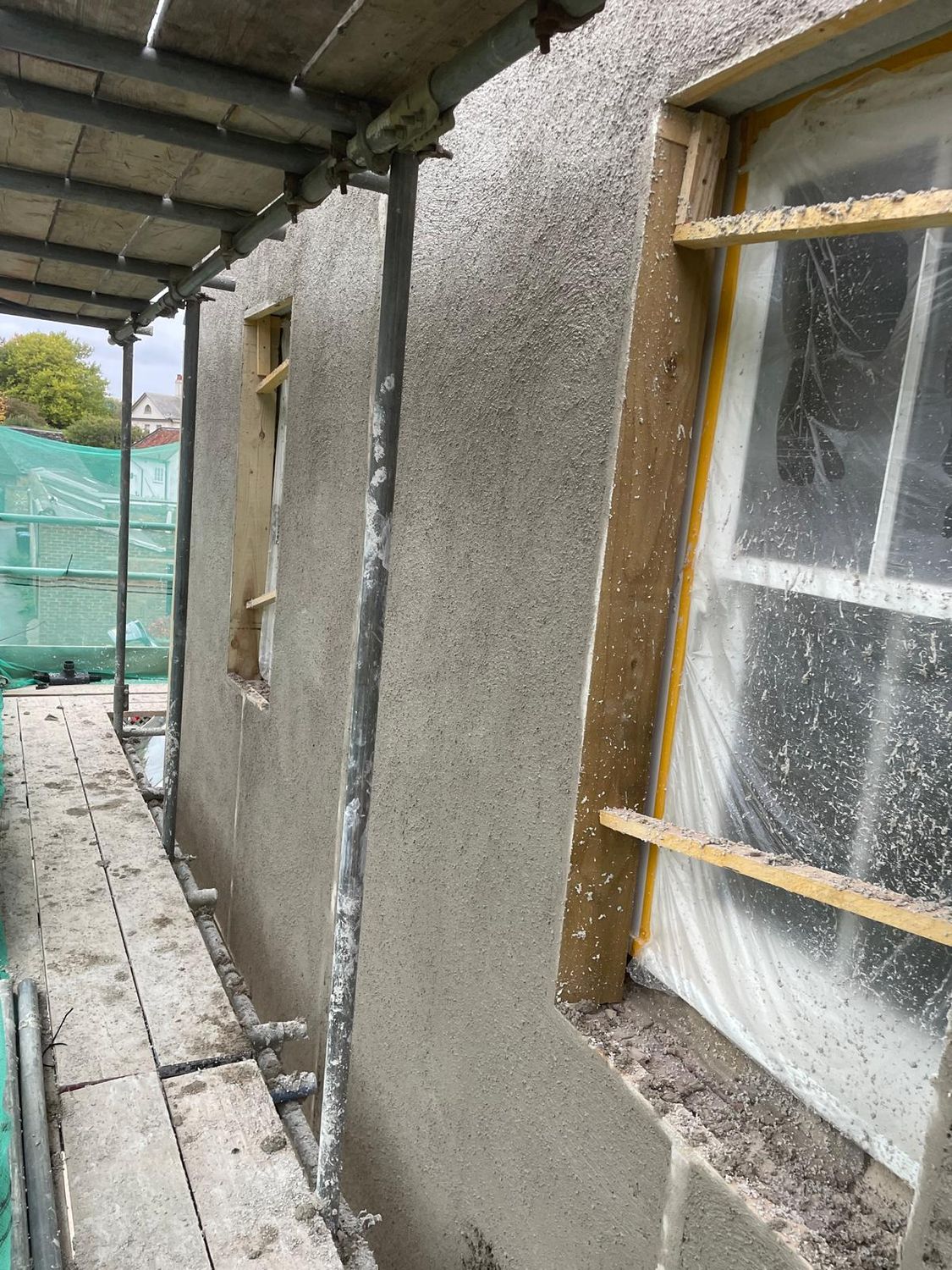
We apply Diathonite as an external insulating render, usually between 30 and 80mm, with a breathable lime smoothing coat finish. The final texture and the colour are yours to choose.
The thickness can be set by a heat loss target you want to reach, or it can be given by existing conditions that aren't to be changed: roof overhangs, adjoining structures, fascia positions.
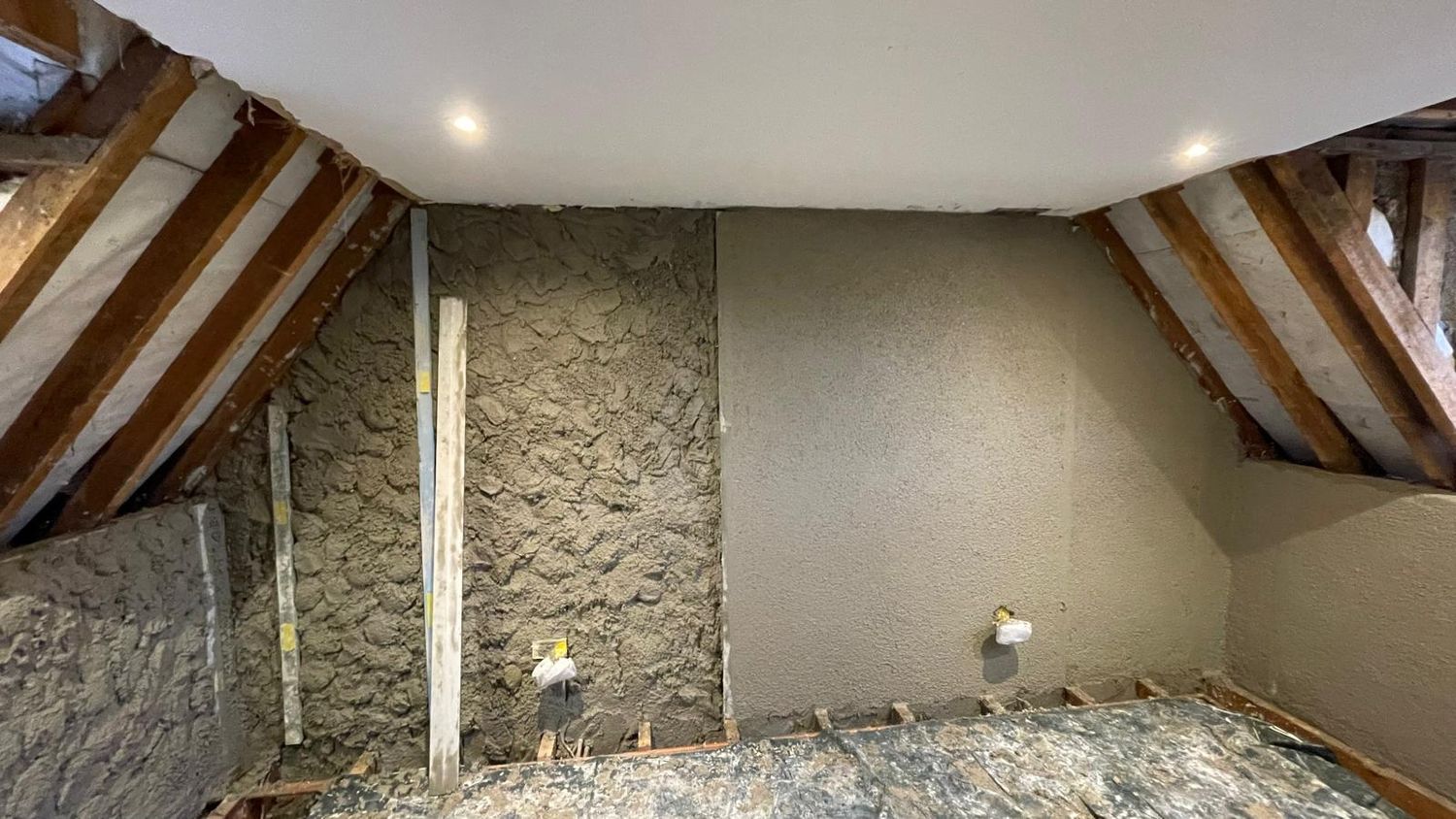
Diathonite is a brilliant choice internally, when the brickwork is crumbling, has moisture issues, or a lime-based plaster is required anyway. It suits listed buildings particularly well, because it follows the curves of the internal face of the wall and keeps the character of the building. It can also insulate areas where thick insulation boards can't get in.
Special attention is needed here, as always, for the details - to keep condensation out. The floor-to-wall and wall-to-roof junctions, the services, the wall returns, and plenty of other bits.
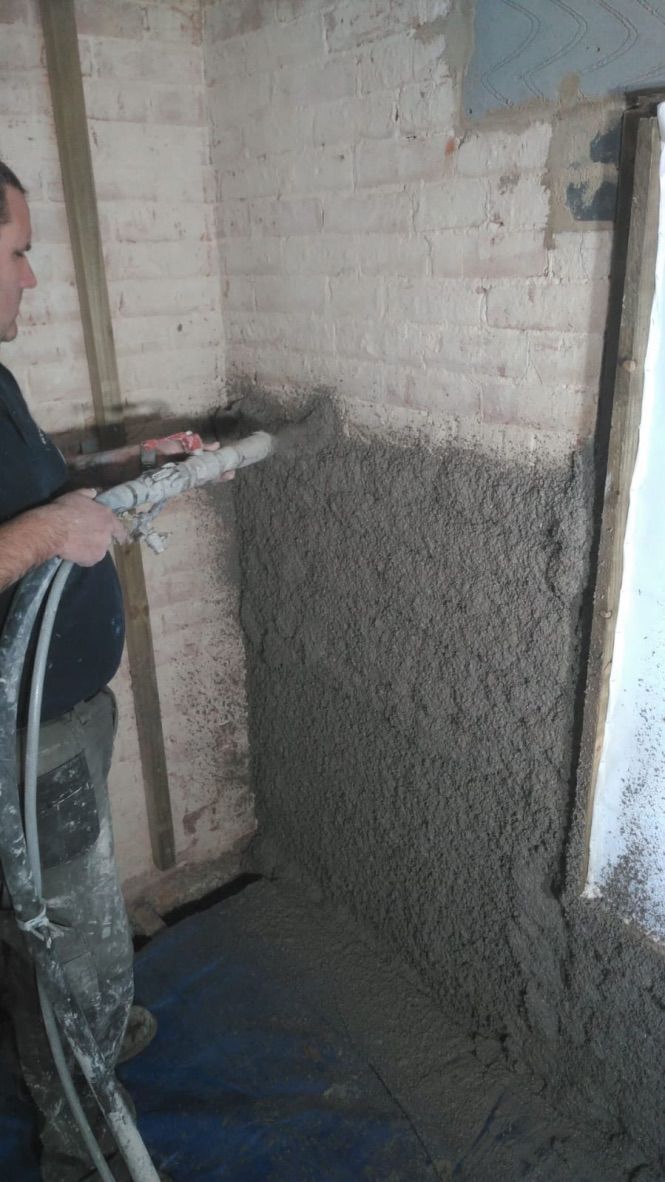
On a large elevation we spray it, which is a bit faster, and lets us reach thicknesses that would be hard work by hand. On small areas, tight corners, reveals and most work indoors, it goes on by hand.
Both are the same material and the same system. It's a question of the size of the job and what's around it.
Three jobs where the standard system wasn't quite the answer, and what we did instead.
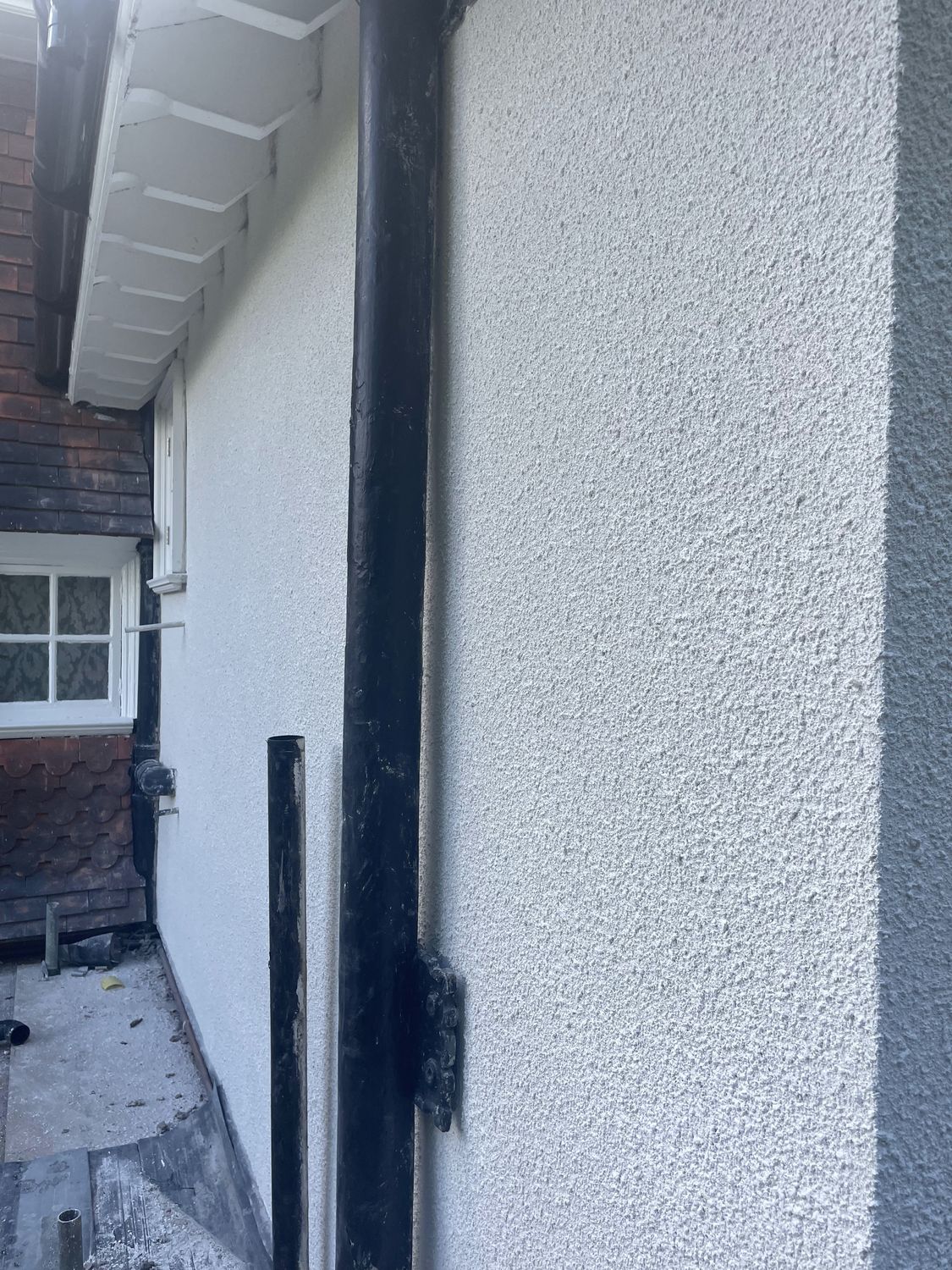
In Harrow the cement render had to come off, and what went back had to be lime based, with a finish close to the original rough-cast.
Rather than switch to a different system we stayed with Diathonite and its smoothing coat, Argatherm, and sprayed it on thick and uneven, without touching it with a trowel or a sponge. The wall is now free of cement, breathable and insulating.
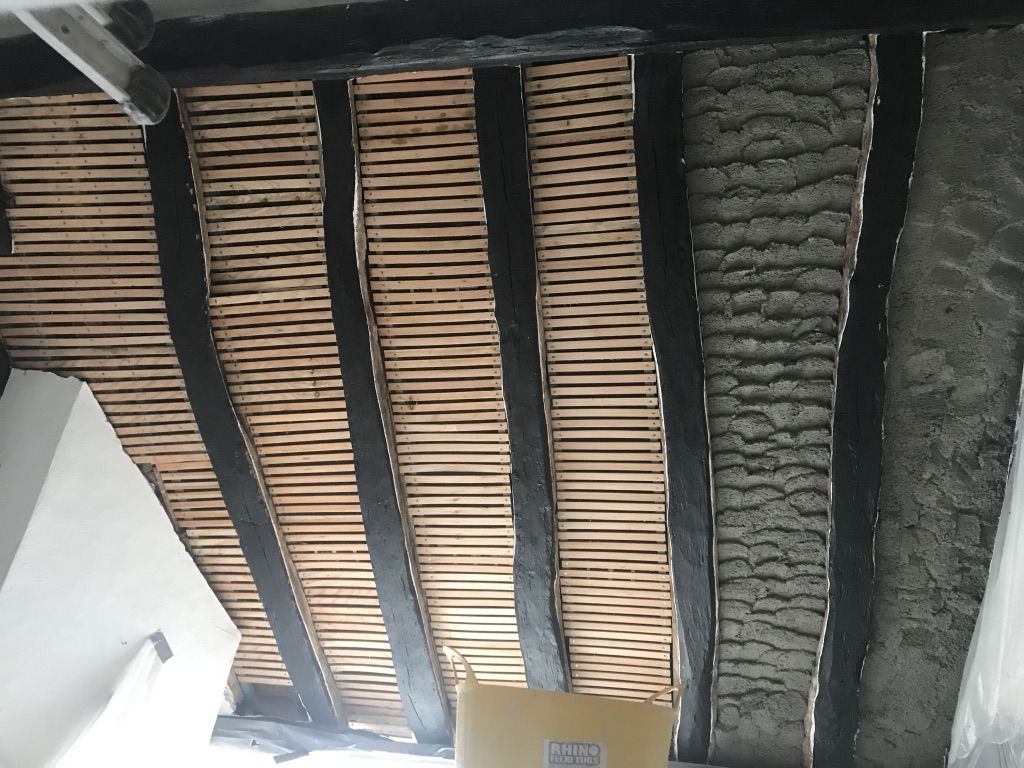
On a listed roof in Buckinghamshire every lath between the rafters had to come off and go back, the roof had to be insulated, and there was no depth available for anything thicker.
So we applied the Diathonite wet system to the lath between the rafters, giving insulation and some airtightness without membranes.
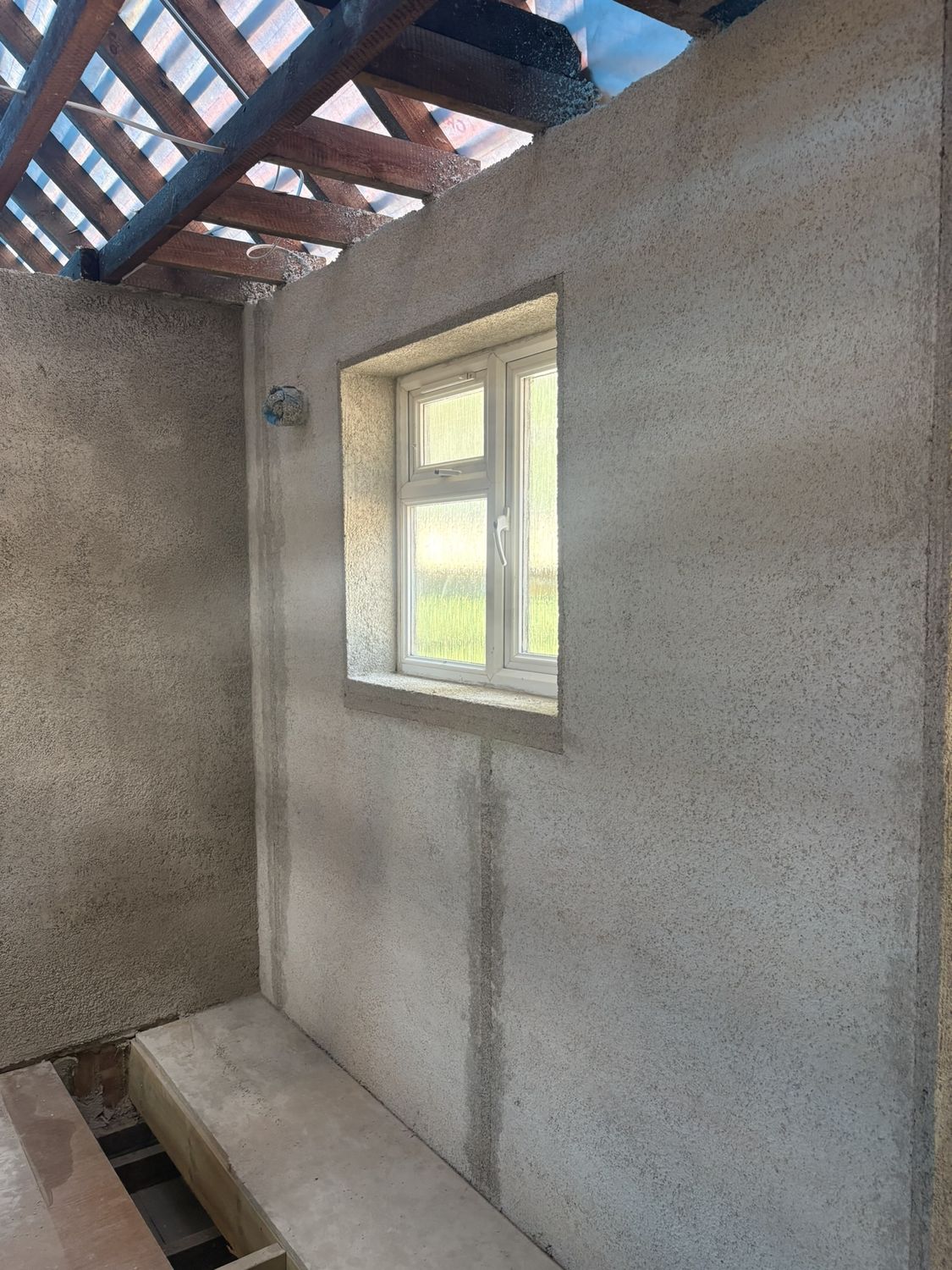
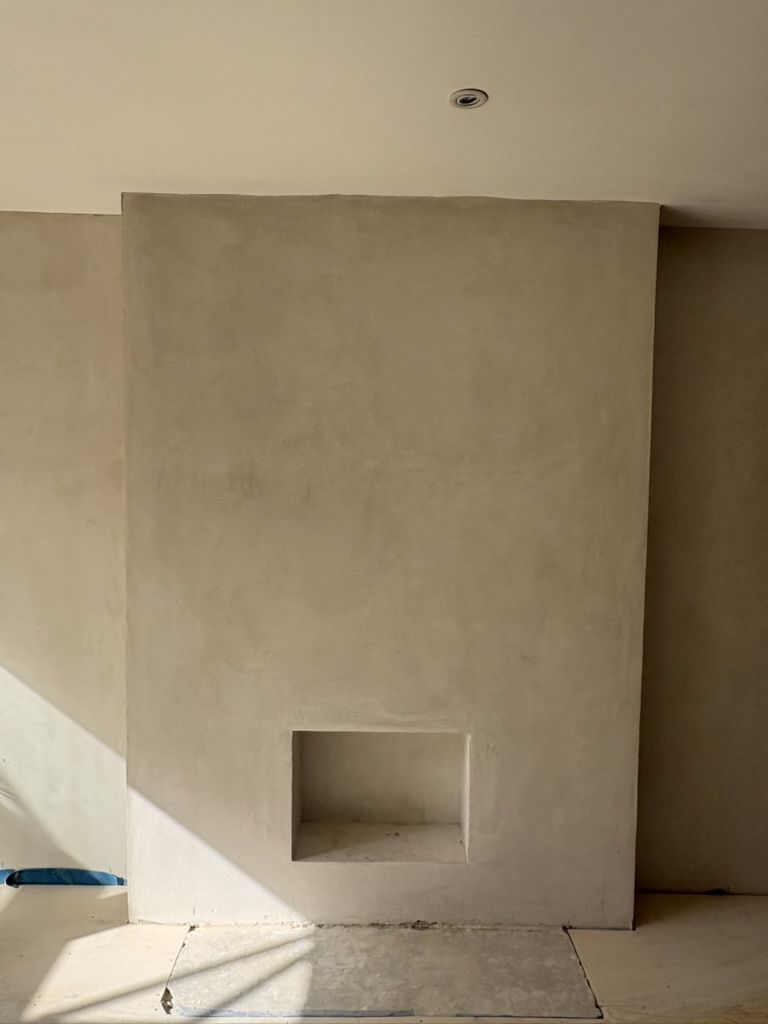
A 1930s building in Stanmore, insulated internally, with Diathonite throughout. The client didn't want to paint the walls: they wanted a slightly rough plaster finish left as it came, cream coloured, faded, and varying across the wall rather than sitting flat and even.
So over the Diathonite Evolution we applied Lime Green Solo lime plaster, and kept its own colour and texture.
“We bought a 1940s detached home in a conservation area and spent months researching low-tox, sustainable ways to insulate it. We met several builders, but after one meeting with Adam from Eco Renovation UK, we knew this was the right team for us. They took on a big job: insulating our five-bedroom home with Diathonite lime-cork plaster, and reinforcing a structural steel beam to bring it up to building regulations. Adam has rare clarity about the end goal and knows exactly how to get there. He's a man of his word and takes pride in his work. His team was punctual and finished on schedule, which saved us from paying for extra months in a rental. Even after the job was done, they've kept in touch with advice and recommendations. In a world of cowboy builders, I'm so glad we found Adam, whom I now count as a friend.”Vaidehi H
If you know what you want done, send us the details and we'll quote for the work. If you'd rather somebody looked at the building first and worked out where it should stop, that's what the survey is for.
